
Friday, 12:30am
29 May 2026
Suffolk’s poster maestro
Working across music, theatre, activism and healthcare, Bob Linney (1947-2023) showed that posters make a difference. By Nigel Ball
Few people complete a doctorate in genetics, only to spend the rest of their career printing posters. Yet this is exactly what Bob Linney did in 1972. Over the next 50 years, Bob Linney (1947-2023) drew, painted, designed and printed posters, leaflets and ephemera for music, film, theatre, charities, festivals, activism and national organisations.
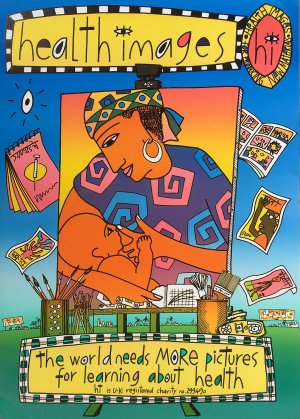
Health Images promotional leaflet, ca.1988, Bob Linney Graphics. ©Jacky Linney.
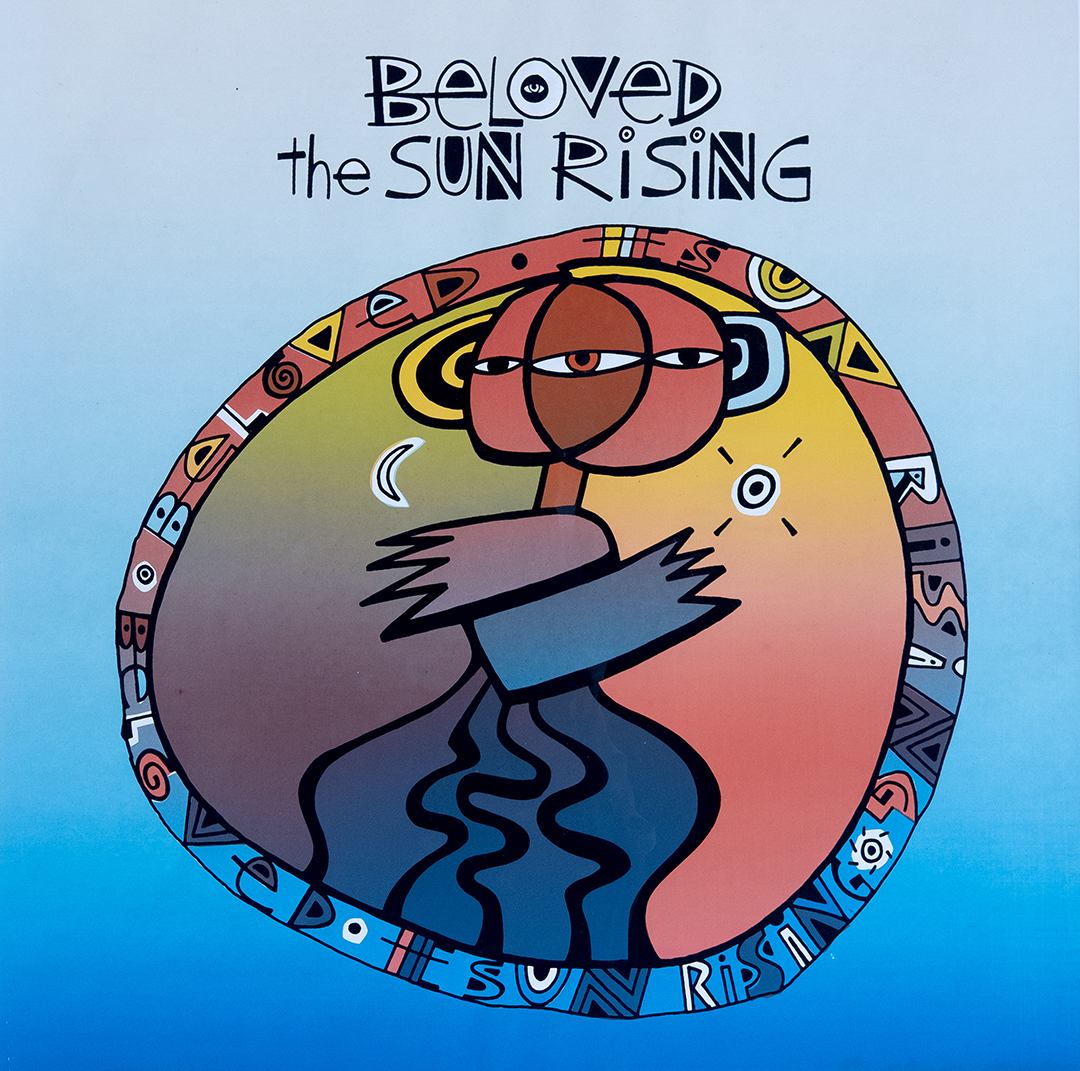
Top. Sleeve artwork for The Beloved’s single ‘The Sun Rising’, 1989. Bob Linney Graphics.
Along with fellow PhD student Ken Meharg, the pair designed and printed posters for theatres, cinemas and events around Birmingham and further afield while at the experimental artist-collective workspace Birmingham Arts Lab, where Linney developed technical skills and an eye for design, creating striking posters alongside Meharg. Learning on the go, their work included stencil and emulsion screen-printing of their own illustration and photography.
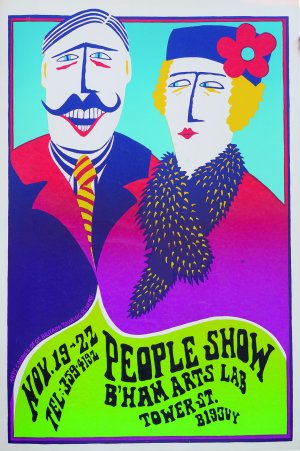
People Show, poster by Bob Linney and Ken Meharg, Birmingham Arts Lab, early 1970s.
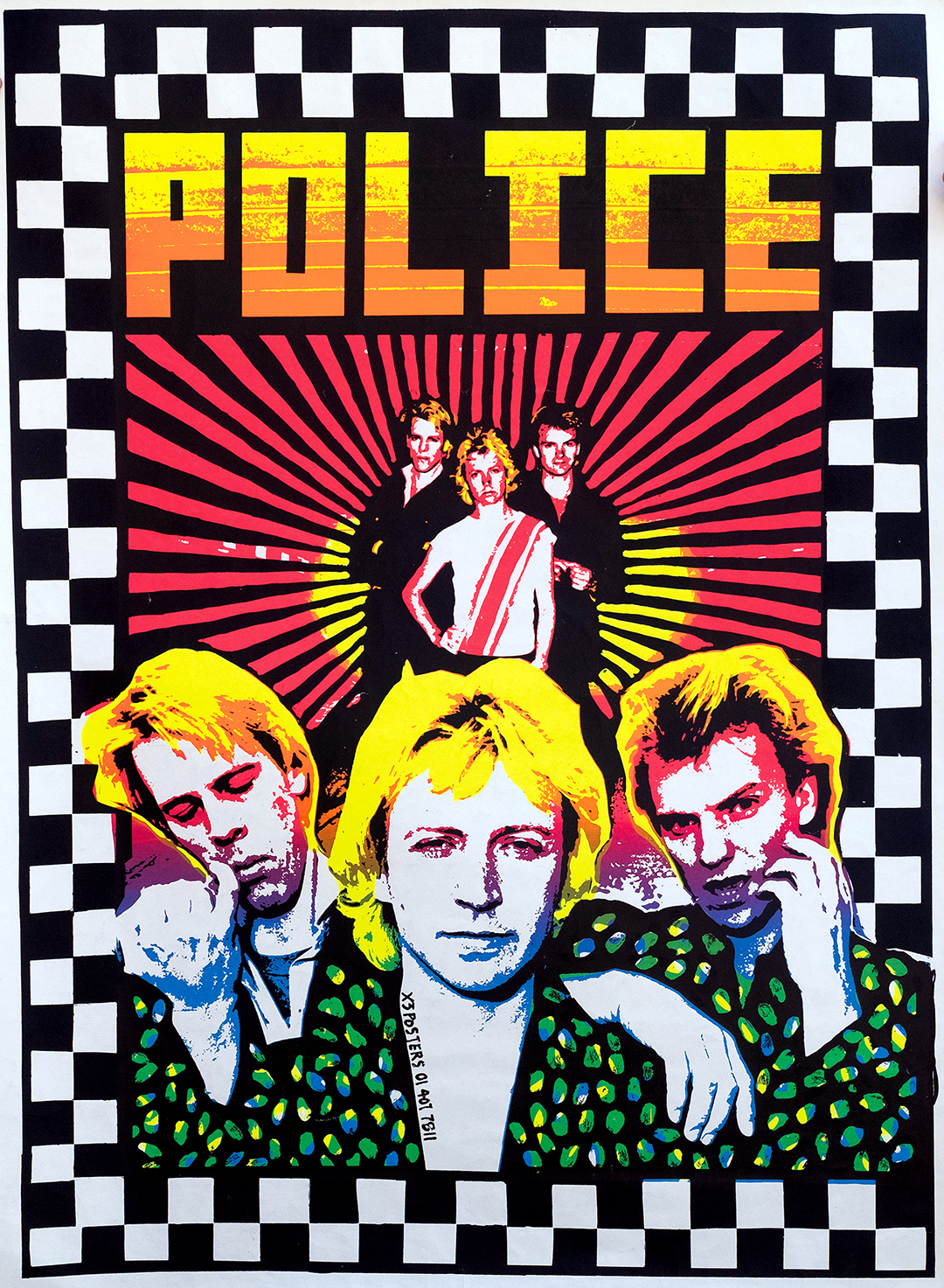
When Birmingham Arts Lab director Ted Little moved to London in 1974 to take on the directorship of the Institute of Contemporary Arts (ICA), he invited Linney and Meharg to join him. After leaving the ICA in 1976, they set up X3 Posters in Butler’s Wharf near Tower Bridge. X3 made posters for bands and venues, working on hand-constructed screen-printing tables, the counterweights consisted of empty five-litre ink tins filled with sand, while the suction bed used domestic vacuum cleaners. Multicoloured and blended print runs of 500 copies were not uncommon – something many commercial printers would never entertain.
Meharg and Linney went their separate ways when Bob moved to Suffolk with his wife Jacky in 1983, launching Bob Linney Graphics. During this period Linney’s style established itself: gradients, linework, caricatures, intense colours and hand-lettering; Linney’s freestyle letterforms – crammed to fit any available space – became an integral and dynamic part of each job.
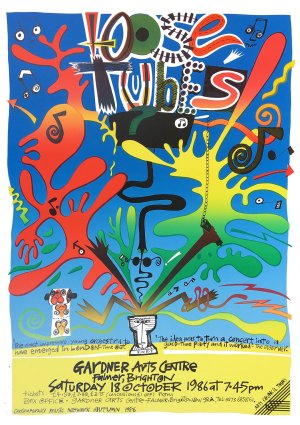
Contemporary Music Network (CMN) poster for Loose Tubes, Bob Linney Graphics, 1986. ©Jacky Linney. The ‘Arts Council Tours’ logo in the corner was hand-drawn by Linney.
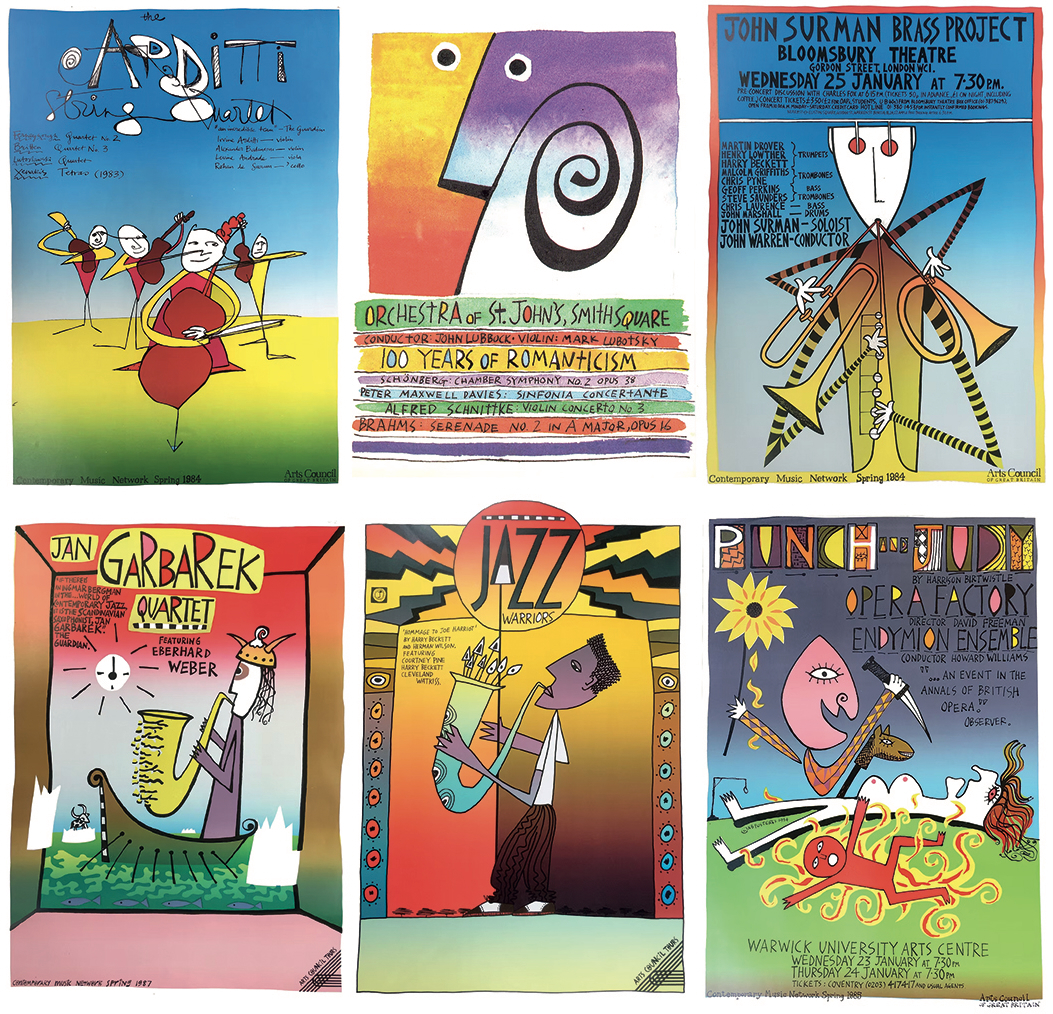
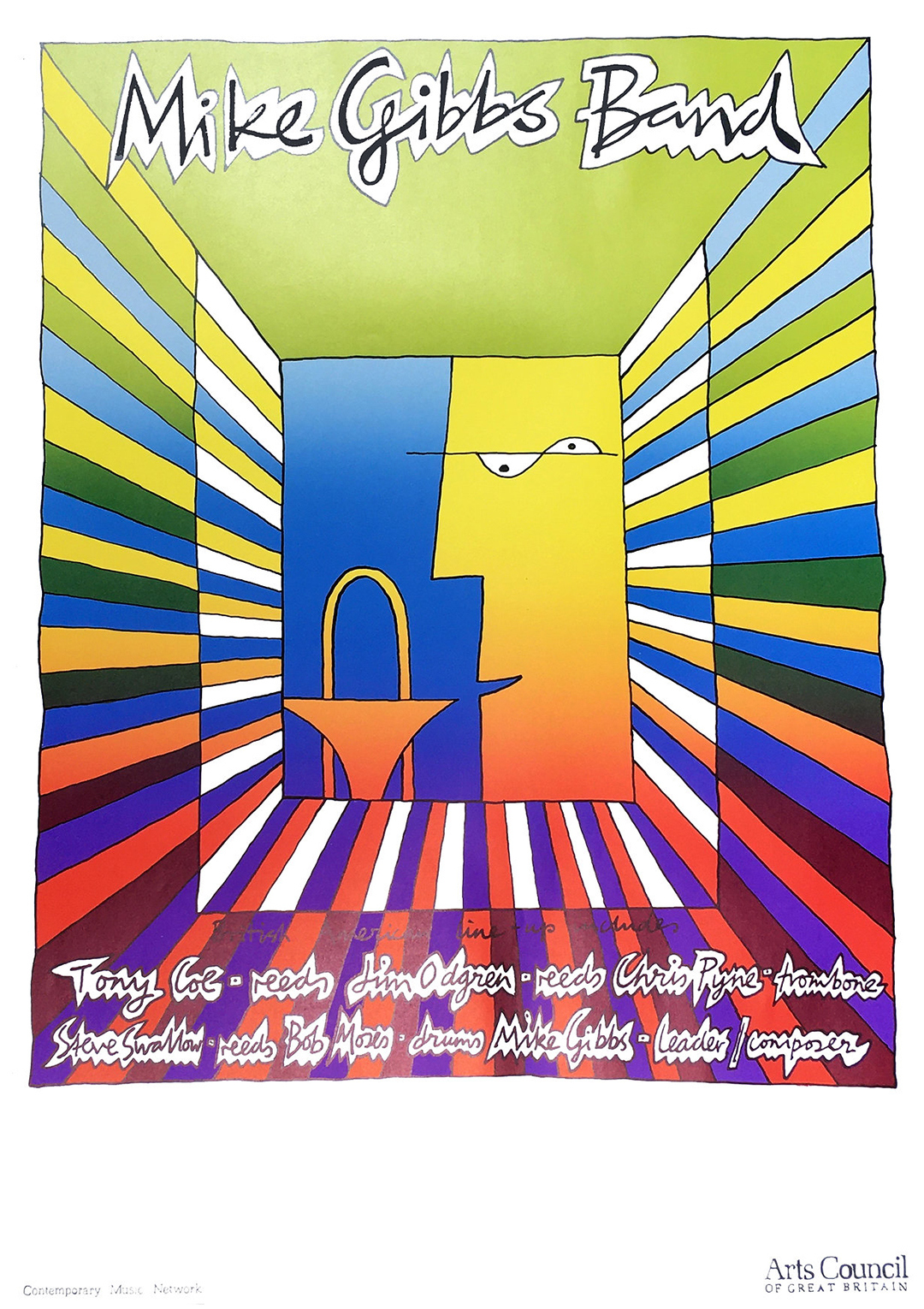
Linney was commissioned by The Art Council’s Contemporary Music Network events (CMN), whose director Annette Morreau wanted to enliven promotion and attract younger audiences. Linney designed and printed more than 70 posters for the CMN between 1983-89, creating a distinctive body of work.
Six Contemporary Music Network posters promoting World Music, jazz, contemporary classical and opera, Bob Linney Graphics, 1980s. They were printed by offset-lithography by Holbrooks Printing Company in Coventry using the split-duct technique. ©Jacky Linney.
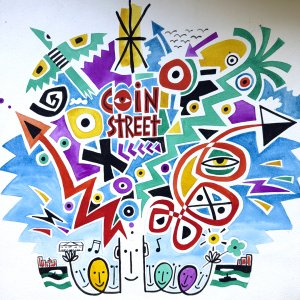
Other high-profile music clients included UB40 (Rat In Da Kitchen) and The Beloved. Regular trips to London kept him abreast of events in the capital, and he became involved in producing posters, graphics and banners for the grassroots activists of The Coin Street Community Builders.
Coin Street watercolour, ca.1984-85, Bob Linney Graphics.
During this time, Bob Linney visited India as part of a British Council sponsored exhibition, which included running creative workshops. Witnessing first-hand the importance of life-saving imagery to impoverished communities, he started running workshops of his own in India, France, Poland and Turkey, leading to setting up the organisation Heath Images in 1983, which was registered as a charity in 1988. Travelling the world, helping community-workers produce life-saving visual aids, became a passion. Linney often took a hand-built fold-up screen printing table with him: he and other Health Images volunteers would carry or drag this table – the size of a large suitcase – across inhabitable terrain to reach far flung communities. Keen to explore how different cultures ‘read’ images and understand perspective and other western ways of engaging with pictures, he sought to help the people he worked with to develop their skills and empower themselves.
Personal work by Bob Linney, watercolour, 2020s.
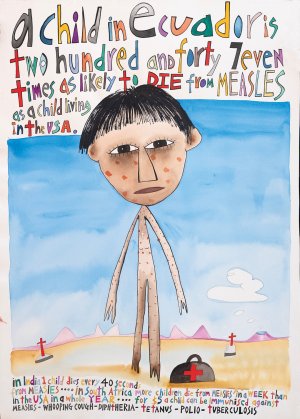
In an article for Waterlines in 1991, Linney wrote: ‘Many past communication failures involving pictorial materials can be ascribed to the syndrome of men in cities designing visual aids for use by women in villages. Local production by community-level workers gives a degree of empowerment and ensures local control of the “media”.’ He went on to further develop these ideas of self-empowerment and the work of Health Images in his book: Pictures, People and Power: People-centred visual aids for development (1995, Macmillan).
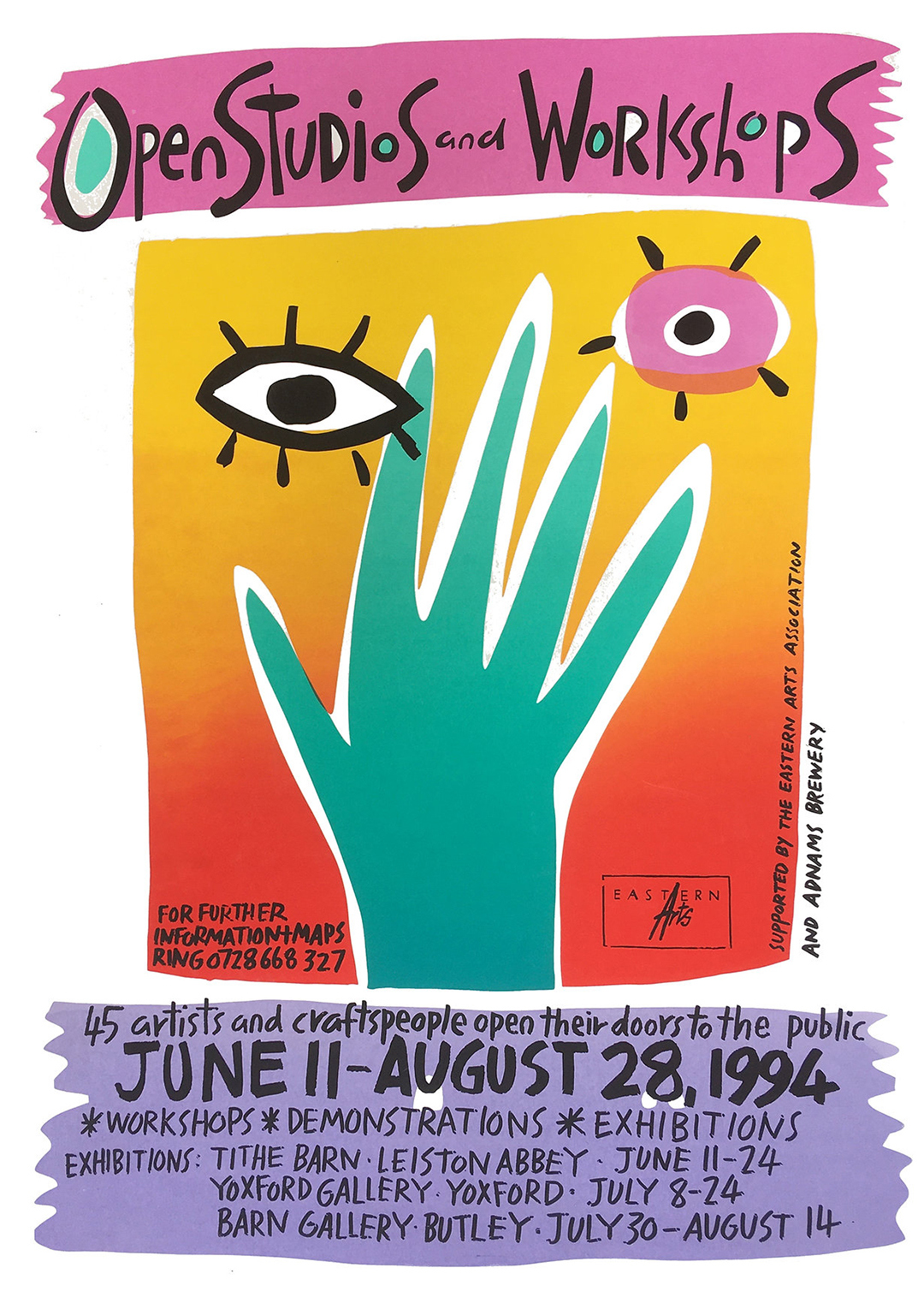
Much of Linney’s work became focused on Suffolk causes and organisations through the 1990s and 2000s. He co-founded Suffolk Open Studios with Tony Casement and Alice Palser and designed their logo, still used today. He also designed the logo for Leiston based classical music school Pro Corda, made work for makers’ cooperative Craftco in Southwold and for Halesworth charity World Land Trust. This he did alongside designing posters, flyers and invites for local fairs, artist events and concerts. Linney also created satirical and highly political personal work that made digs at the ramifications of colonialism on different countries around the world, using watercolours and working on A0 poster size paper, right up until his untimely death in 2023 – a poster maker right up until the end.
Nigel Ball, designer, educator, writer, Ipswich
This article would not have been possible without the invaluable information supplied by Jacky Linney and Tony Casement.
Finding Bob Linney: an exhibition of a graphic life, the first comprehensive look at Linney’s work, co-curated by Jacky Linney, Tony Casement and Nigel Ball, is at The Cut Arts Centre, 8 New Cut, Halesworth, Suffolk IP19 8BY from 27 May to Sat 18 July.
The Police, X3 poster commissioned by manager Miles Copeland, ca.1977-78 (before the band signed to A&M).
Open Studios poster, Bob Linney Graphics, 1994. ©Jacky Linney
CMN poster for a tour by jazz composer Mike Gibbs, 1983, Bob Linney Graphics. A space at the bottom of each design was left clear so that each venue could overprint its details.
Eye is the world’s most beautiful and collectable graphic design journal, published for professional designers, students and anyone interested in critical, informed writing about graphic design and visual culture. It is available from all good design bookshops and online at the Eye shop, where you can buy subscriptions and single issues.