
Summer 2026
Reputations: Samar Maakaroun
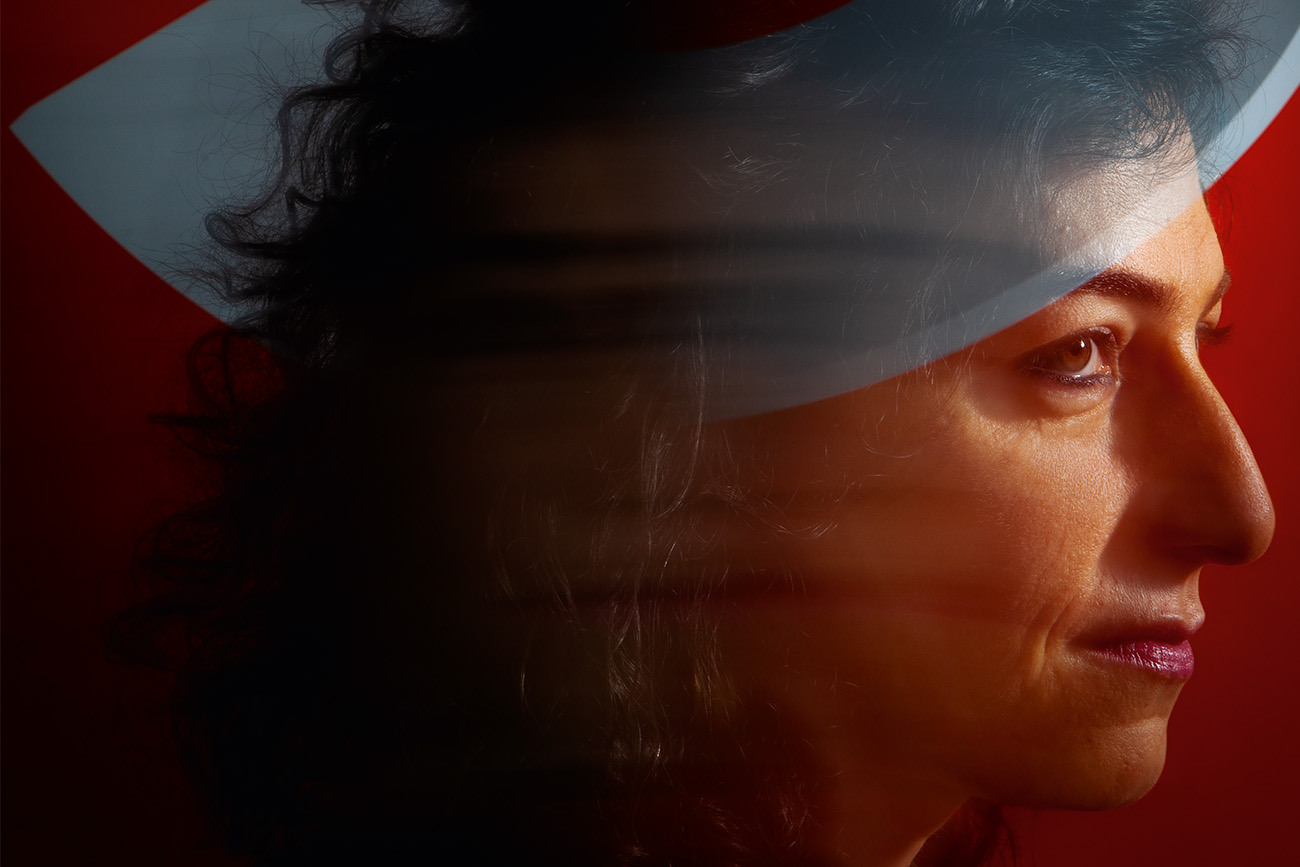
‘Lebanon
was bombed. My sister-in-law was evacuated. I can’t just talk about
type and design. Who am I? How phoney would I be if that’s all I’m
talking about?
Samar Maakaroun was born and grew up in Beirut, Lebanon, in a trilingual household, and studied at the American University of Beirut (AUB). The course was a BA in graphic design, which included art history and electives related to motion, film and the history of Islamic art and architecture.
Upon graduation she set up a studio in Beirut and worked on cultural and publishing projects for local clients. In 2003 she worked as a stage designer for theatre director Rabih Mroué on a number of widely touring productions, a collaboration that continued for fifteen years and enabled Maakaroun to visit many festivals across Europe.
She won a Said Foundation scholarship that enabled her to move to the UK in 2005 to take a full time MA in ‘Cross-Sectoral and Community Arts’ at Goldsmiths, University of London, in southeast London.
Over the next decade and a half, mainly based in London, she freelanced for a variety of design agencies, including M&C Saatchi, Apple Marcom and Pentagram, where for two years she collaborated with Angus Hyland on the Abu Dhabi Media portfolio. This included Majid and Aletihad, the Emirates’ oldest newspaper. She then worked on other projects with Marina Willer and Domenic Lippa.
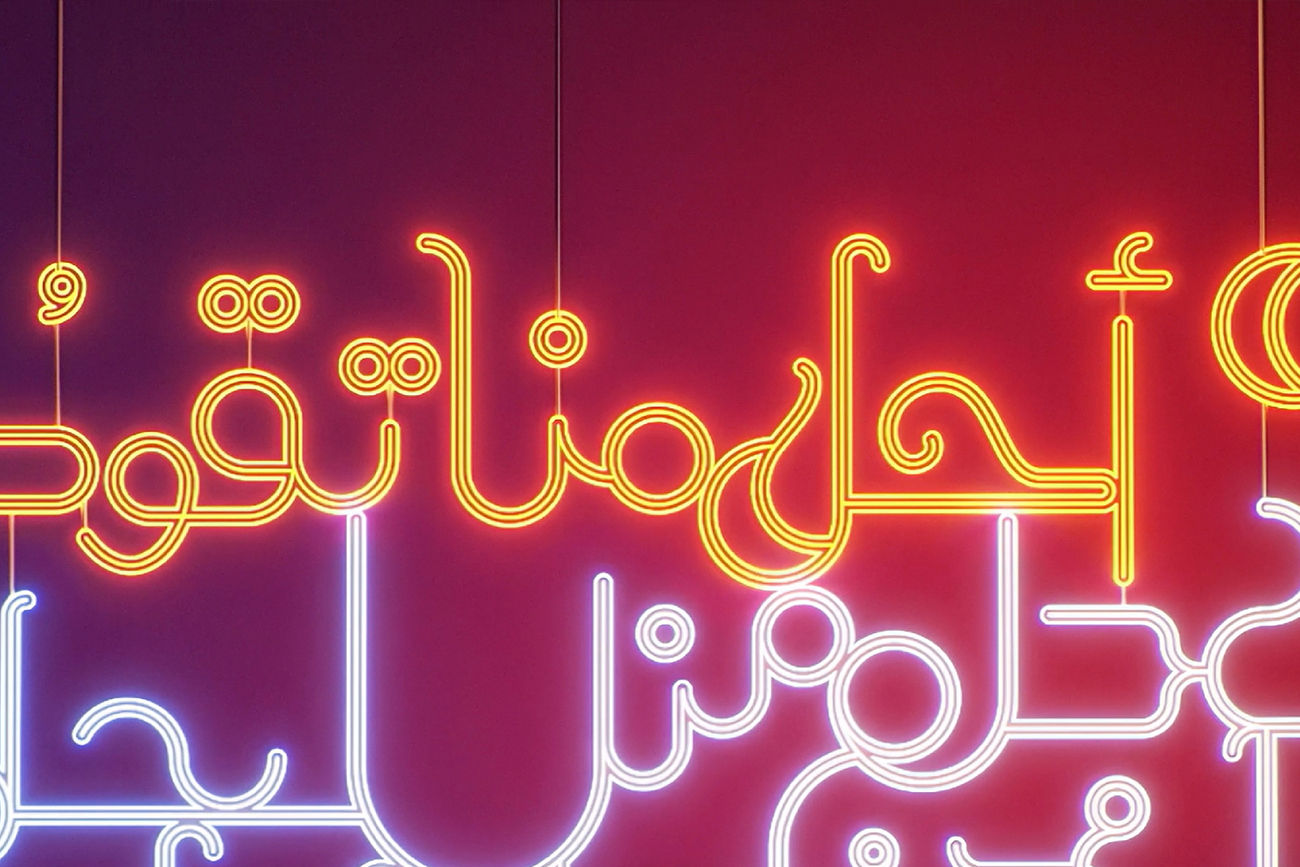
In 2021 Maakaroun founded her own practice, Right to Left, working for international clients on multilingual, multicultural projects, with work for Porsche, SumUp, Totem and projects such as 29 Words for 29 Letters.
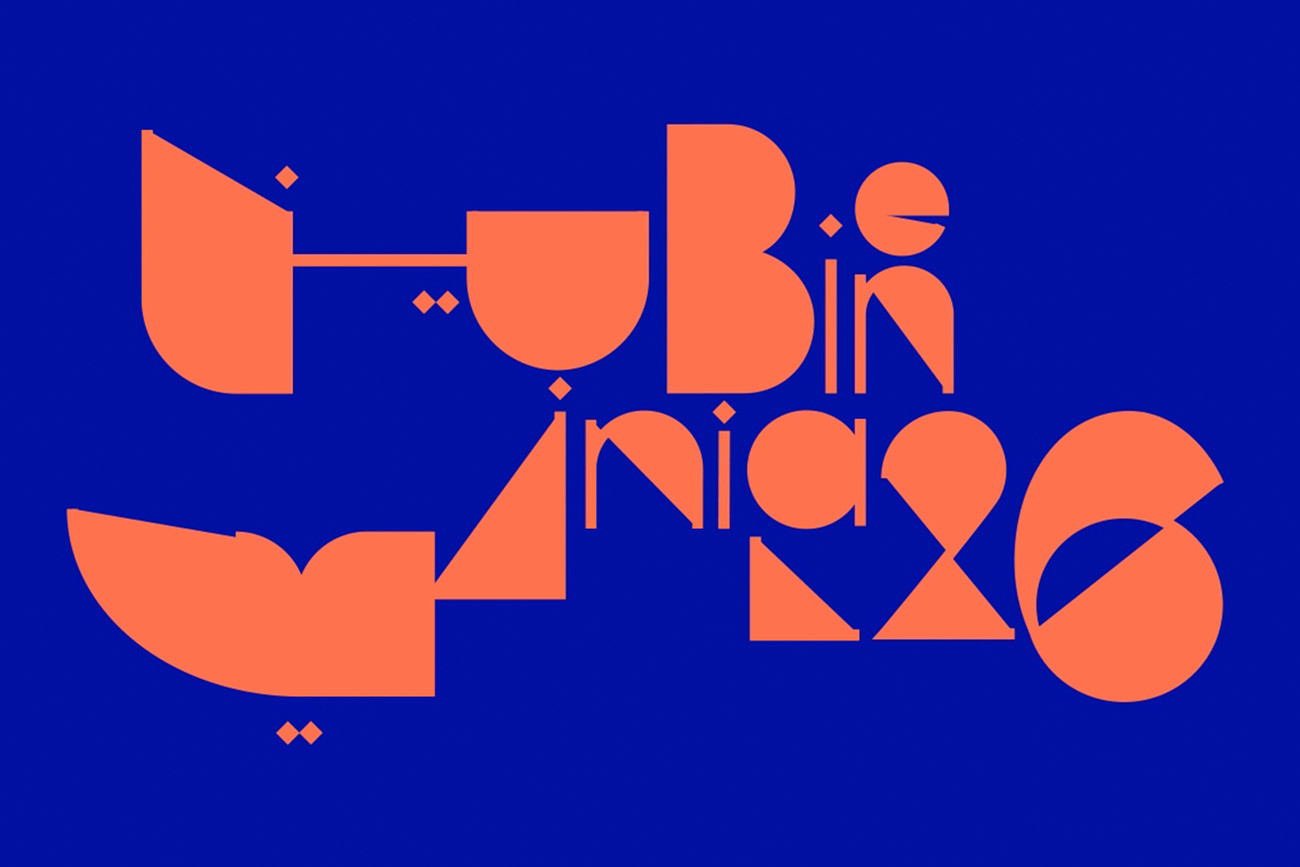
On 3 October 2023, Maakaroun joined the London office of Pentagram, where she heads a team of four or more designers. Her current client list includes: Sharjah, one of the seven United Arab Emirates; cultural venue Mosaic Rooms; chef Marwan Badran’s Chateau Engalin; ceramicist Bisila Noha; Design Doha Biennial; quantum computer manufacturer Quandela; and music festival Balad Beast.
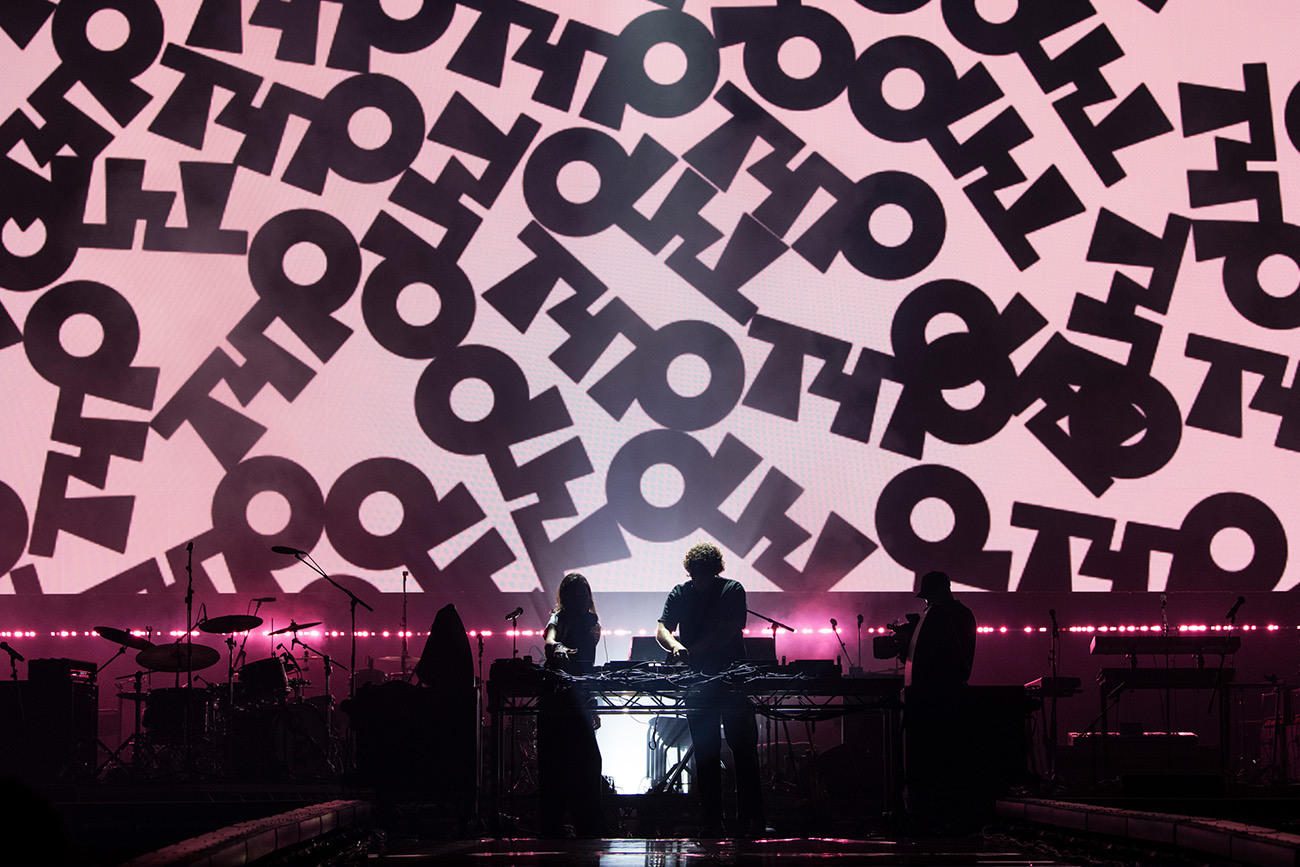
Maakaroun designed the identity for ‘Together for Palestine’ (T4P), a fundraising concert initiated by music producer Brian Eno held at OVO Arena Wembley on 17 September 2025. T4P featured a plethora of performers, including Hot Chip, Bastille and Saint Levant, with stage design by Es Devlin and Gazan painter Malak Mattar.
This conversation took place at Pentagram’s new London HQ on 10 February 2026, weeks before the US / Israeli attacks on Iran and Lebanon.
John L. Walters
When
did you first encounter graphic design?
Samar
Maakaroun
When
I went to the American University of Beirut in 1997, I didn’t know
what graphic design was. I grew up in a place where people did hand
calligraphy.
There was a guy who
made beautiful handmade banners in his back yard, which we could see
from my grandmother’s house. Lots of brushes, paint and cloths …
Were you good at art or calligraphy?
Art was where I found joy and peace. My biology teacher wanted me to become a doctor, but I was scared of blood. Another option was mathematics, which was linked because it’s also about patterns and systems, or physics.
The AUB course was set up by Leila Musfy, who made sure it was in the school of engineering and architecture … to give it an air of seriousness.
In those times, there were only a few digitised fonts for Arabic, and we needed a dongle to allow for reading right-to-left through our softwares: software designers were largely English-speaking, and other languages came as an afterthought.
There were a lot of workarounds to do right to left. We had a typography teacher, Samir Sayegh, who’s an icon.
When you think about the Arabic script, it’s close to Islam. Arabic proliferated in order to copy the Quran, and religion is close to identity. You can be more free in English because in Arabic you always have the ‘you cannot do this, no, you cannot do that, it is not legible “Hamza police”.’ And I’m like, why not? Look how much play we have in Latin! Language connects everything.
…
Interview by John L. Walters, Eye editor, London
Read the full version in Eye no. 110 vol. 28, 2026
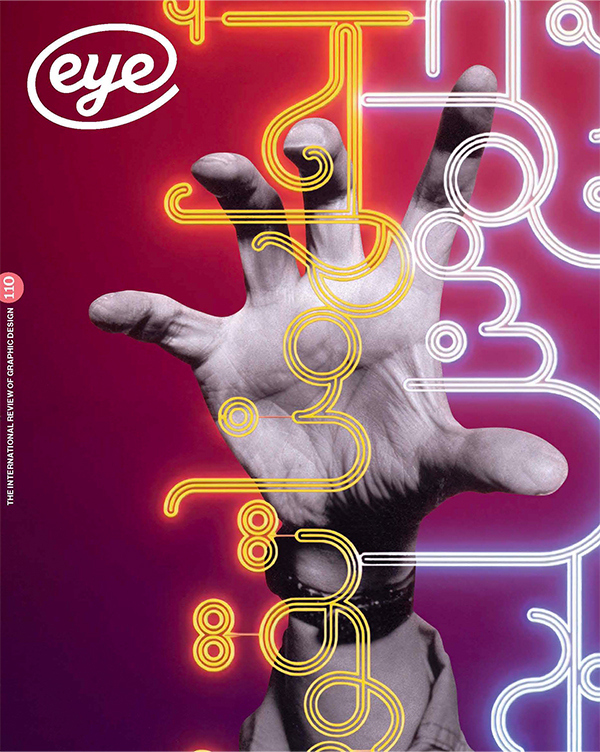
Eye is the world’s most beautiful and collectable graphic design journal, published for professional designers, students and anyone interested in critical, informed writing about graphic design and visual culture. It is available from all good design bookshops and online at the Eye shop, where you can buy subscriptions and single issues.