
Winter 2025
Where the wild type is

Working across record covers, logos, merchandise and stage design, Amaya Segura brings innovative typography to contemporary R&B, hip-hop and beyond.
Interview by Holly Catford
When I stumbled across Amaya Segura’s Instagram feed (@epistolare) I was instantly excited. Segura has had a hand in most of the recent records I have loved, both in terms of design and music. Contemporary R&B artists such as SZA, Jazmine Sullivan, H.E.R and Giveon all have their sights set on the future, with one toe still dipped in a classic R&B sound. This is what Segura references so incredibly well in her work for them. She produces work that is sited in the now.
Segura uses the visual language upon which these artists were built, in new ways, never as a pastiche or ironically.
Born in 1989, Segura combines a classic sense of typography with lettering styles derived from growing up in the Bronx in the early 1990s as a first-generation Dominican American. She graduated from Parsons in 2011 and started working at Nickelodeon in 2014, until joining Sony Music Entertainment in 2017 as Senior Art Director. In 2022 she went to Warner Music Group, where she was VP, Creative Director.
Having left Warners in 2024, Segura now runs a studio under her own name. She connects deeply with the artists she works with – understanding their vision for their music is key to the way she produces such individual work for each of them. You can see this in her collaboration with Giveon, for whom she has designed record covers, merchandise and, in June 2023, the stage design (with co-creative director Danielle Scott) for the annual Governors Ball Music Festival in Queens, NYC where he performed.
Segura has
worked with some of the biggest pop acts in the world, including Latin star
Rosalía, Ozuna, King Princess, John K, Miguel, Flo Milli, VanJess, LK47, Becky
G, English ‘Thai-rish’ singer Sinéad Harnett and Doja Cat.
Heaux Tales by Jazmin Sullivan.
Top. Portrait of Amaya Segura by Myesha Evon, 2024.

Holly Catford: Amaya, you tend to use common classic typefaces such as Helvetica and Georgia within the R&B/hip-hop arena, using them out of their normal context, as with Jazmine Sullivan and the newer Coco Jones cover. When did you start doing that?
Amaya Segura: It’s a skill born of necessity, in the sense that really a big thing about creating art for labels is understanding that you need to be able to clear every single font you use legally.
I started
taking the bones, these typefaces as the bones of things, and either giving
them an alignment or a placement or a treatment that really makes them edgy.
With Helvetica, it’s one of those fonts that can be completely contemporary if
you use it in the right way. It can also be completely bland and authoritative.
It’s placement
and colouring that take it to that place. Helvetica was one that didn’t need a
lot of tweaking, but with a font like Georgia, it was about, okay, what are the
pieces, the bones of Georgia I can start using?
Cover of Giveon’s debut album Take Time, 2020.
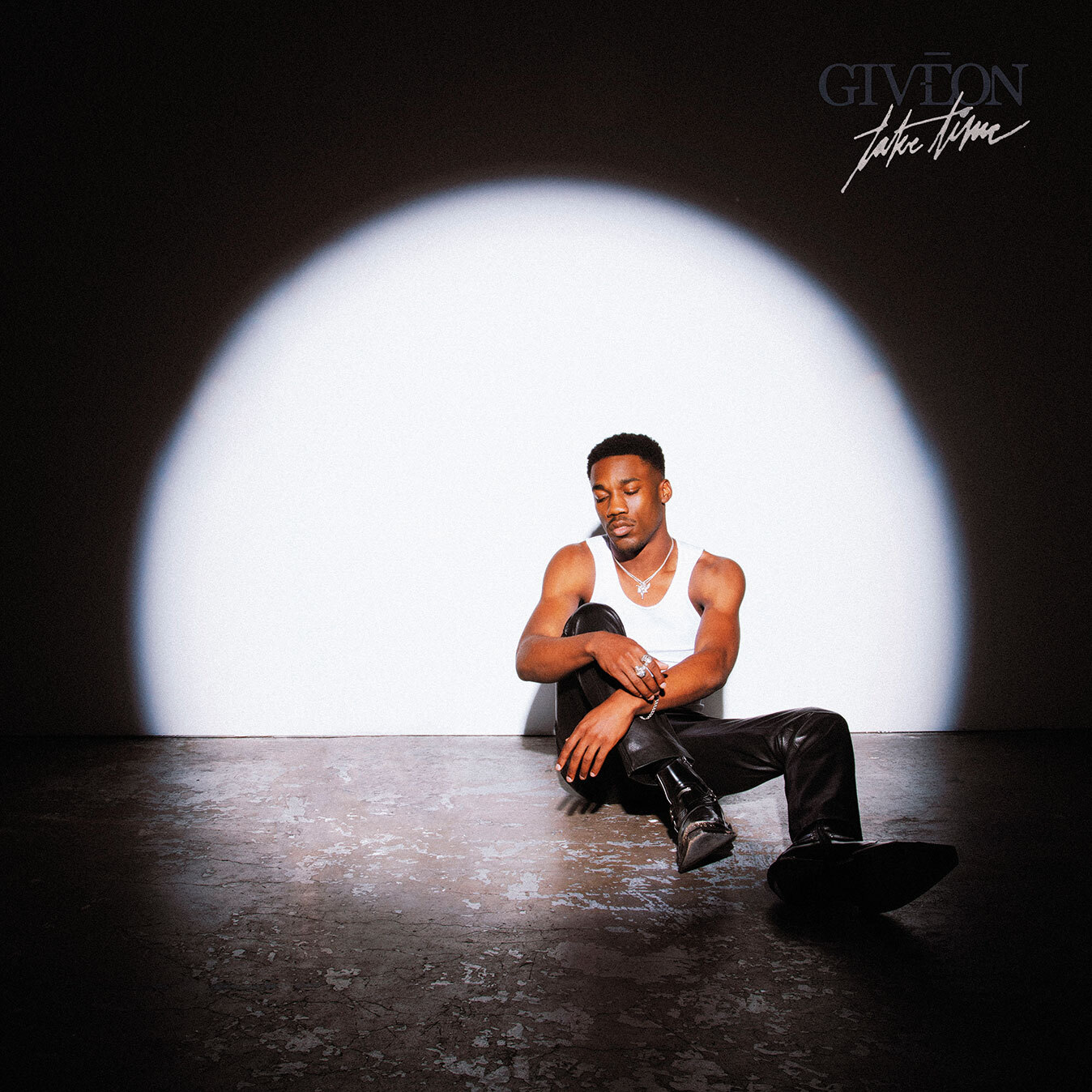
What I really liked about that font for Giveon was that it was rounded but sharp. I needed something that had that duality of like, yeah, it’s smooth, it’s silky, but it’s not too friendly.
It’s like his music, isn’t it?
Exactly. It needed to have some edge to it. Looking at the typefaces, this one has the right ratio of serif to curve. A smooth curve on the ‘G’, which I modified to death, but it was a good bone. I’m looking for a typeface that has the right curves and shapes that I can modify to where I need it to go.
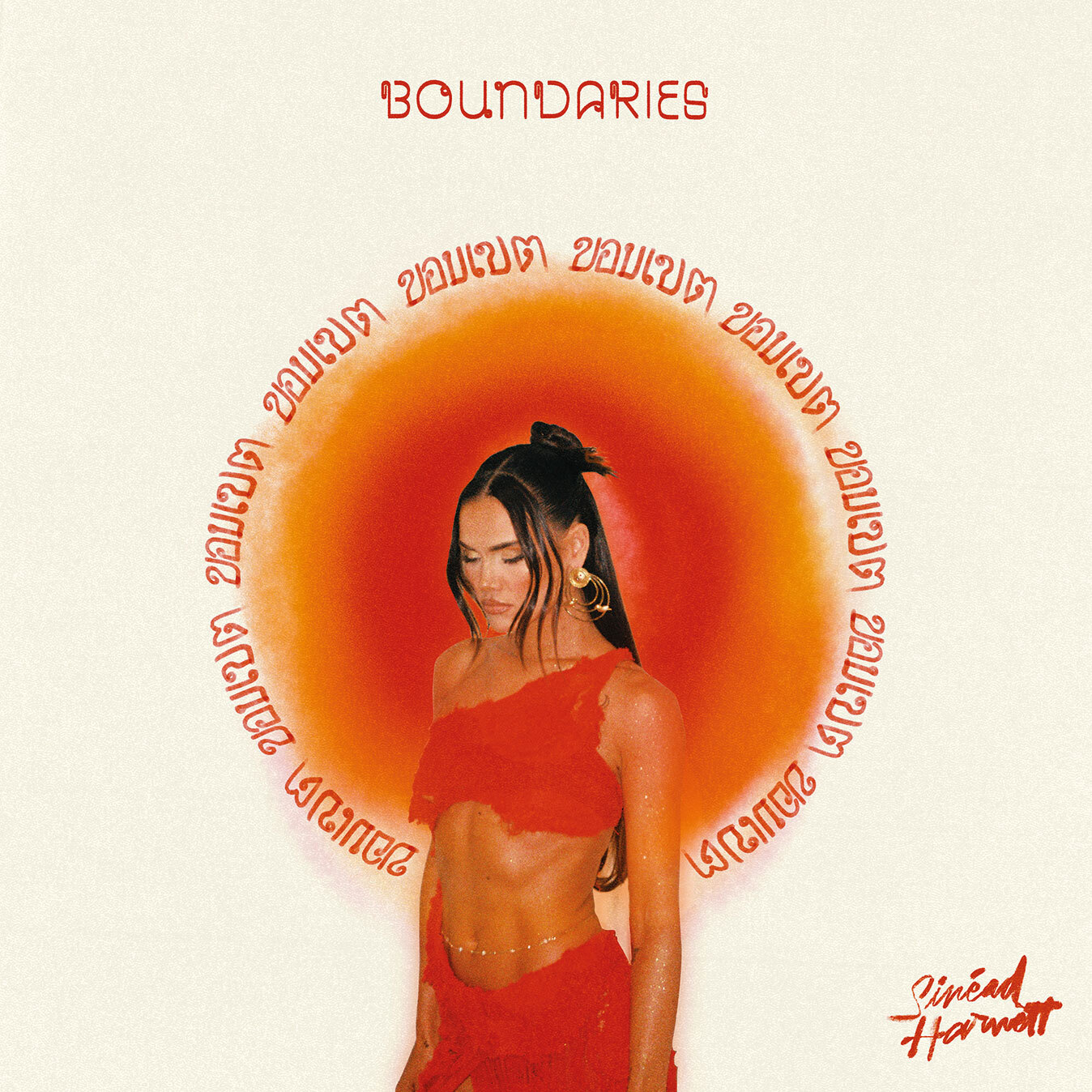
Sinéad’s typeface is based on the bones of a heavily modified Helvetica. I cut it up, chopped it into pieces and went on reforming it.
And I drew the Thai letters right under it. So I would draw a piece of the Thai letters and see which pieces of the Helvetica would fit with it so that I could reassemble it like a puzzle.
How did you get into design for music? How did you get to where you are now?
I was trying to find a place where writing and illustration met. In a past life, I thought I was going to become a linguistic anthropologist. I have always been curious about language and there’s so much of our culture that gets transposed subtly into the language. That’s true for graphic design, too. You start in a different way: in linguistic anthropology you depend on phonetics and cultural connotations, while in graphic design, it’s almost like the next level, because you have to learn to communicate to a specific audience.
Cover for Inayah’s single ‘Hot Sauce’, 2024.

We were all online, on MySpace and I was a fake little online rapper. I thought I could battle rap and my ‘rap crew’ needed forum banners. So I started doing banners and mixtape covers. It was so exciting, to be able to put pieces together.
One thing I’ve learned is that you need to be constantly creating the work you want to be doing, whether you’re getting paid for it or not. I reached a point where I was making work that was more creative.
I got an agency job, and then made it to Nickelodeon, which is when I started doing projects for people, super-cheap, who were around music. My first official cover I had on Spotify was Giga Herbs, and they had me do their album cover. That was the project I was able to show when I went to a Behance portfolio event. Creative director Julian Alexander saw me there and said, ‘you should definitely apply to music.’ And I did.
You’ve said that music comes first. Everything else follows. How is the process different for each project and what ties your process together?
Every project is super different. It’s like you’re trying to make a cake, but one person only has strawberries, another person only has chocolate. How you make your cake is going to be different. The constraints make the project. People ask me when they’re starting a project, ‘oh, can you tell me what budget you need?’ And I say, ‘actually, you should tell me.’
I’m a big, avid, furious mood-boarder on Pinterest. There’s so much value in having a starting point, because so many people are pulling from the same place. I think of it as a way to explain to someone what the theme is without words.
For Jazmine, it was a contemporary Helvetica treatment mixed with clean and raw photography, but soft and feminine because she was trying to show herself as a woman. So it was a dichotomy: this is raw photography that’s going to be sexy, but it’s going to be feminine. And this is going to be with a really sterile typeface that is almost streetwear-leaning. That combo and that colour combo as well as the lime green with the black became the signature for that whole package.
I sometimes ask my artists to think about what emojis they want to use for an album launch. Are you going to use the time symbol or the apple or whatever?
That’s such a good question …
Yes, it unlocks some things when we have a conversation about emojis. Time is an important element with Giveon, so we use the little sand time emoji [hourglass] or the clock. That helped us create a theme from time. We started thinking about clocks, circular movements, sunset and sunrise.
You tend to work with R&B and rap musicians. Why is that, and how is it different to other genres, design-wise?
R&B was a kismet moment where we found each other. When I was in Nickelodeon, I used to get the comment, ‘this is nice, it’s a little urban.’ So I decided it was time to move to adult things. R&B was in a moment where there were a lot of expectations projected on what R&B cover art looks like. For a long time it was a romantic photo, maybe a hand like this, maybe a little title here on the side and …
Some chrome type in there …
Something super moody and whatnot. All those things are valid elements, but R&B is in a place where it’s evolving and growing. Artists like SZA who were taking it in other directions. R&B was a mesh of all the styles I ended up liking. I love things that have meaning. I love symbolism. With the Sinéad Harnett cover, she had a lot of elements of her culture she wanted to bring in, but she wanted to figure out how we weave those things together. It’s all about finding stories to tell. Like building Giveon’s world, which is very cinematic. For example: this is the moment you’re walking away from a relationship and that’s why you’re turned away from the camera.
I was born in the Bronx, so I have a deep need to make bling type, and that satisfies it for me a lot. But hip-hop is a genre where visually it’s been a similar journey to punk. Both hip-hop and punk have had an equal impact on my aesthetic. They are probably also the two categories with the most expressive typography. That’s where I want to be, wherever the crazy type is!
How has your work at big labels changed your design and process? How has it changed, now that you’re not in-house?
What it’s given me is an understanding of what deliverables the artists are going to need. That’s the number one thing, because I saw at the label how quickly they burned through press photos or not. Sometimes artists will get a big bucket of press photos and use two and never use the rest.
One of the things about working within a corporation is that you’re segmented to a department. It’s really, really hard to find a role in a label where you can just follow an artist creatively throughout their whole journey and help them from the digital marketing aspect over to the creative assets over to the tour, over to the video and over to content rollout.
Part of being a creative director is you can’t just be creative. You have to be very type A. I can show you spreadsheets and charts … timelines, vendor charts, all of those things.
Boundaries, by Sinéad Hartnett, 2024.
What are your career highlights so far?
Doing the Governors Ball stage design [June 2023] with my friend from high school was probably one of the most meaningful projects to me.
Working on Becky G’s Mala Santa was the first time I got to work on a Latin album cover, and I entered the space really understanding that Latin is underrated and not seen in the same way as other genres. I want to continue to put my stamp on creative for Latin. The genre has a lot of similarities with K-Pop – there’s a huge creative force there.
And when I can tell my parents I worked on Aretha Franklin and they’re excited and so stoked, that definitely resonates a lot. There’s Tenacious D. The post-apocalyptic one was one of those rare moments where I could be as extra as I’ve ever wanted to be, and that was fun.
Does your background affect the work?
I take a lot of pride in being Dominican and being from New York and also being a black woman in design. When it comes to being from the Dominican Republic, there’s an element of being bicultural. Not just understanding the Spanish market, but understanding how different each market can be. When you live between two cultures, you have this kind of ‘zoom out’ that you’re able to understand.
I don’t know Thai, right? But I could work with Sinéad because she was able to explain her culture to me, and I could understand from my outsider’s perspective. I’ve talked about this with a lot of people who are bicultural, you almost feel like you’re an outsider and at home simultaneously.
There’s a huge number of female musicians, but I feel like creative direction has been, even in fashion, a mostly male dominated field. Mostly white male.
I’ve given talks and had people come up to me after and say it was so cool to see a girl from the Bronx or to see a Latina.
At Parsons, they brought in this guy to talk to us about his journey – he had an agency that did design for jazz festivals. And that was the coolest thing I’d heard. I was like, do you think I could possibly someday be a part of that world doing design? I know music is a tough category and it’s not doing well – and he was like, ‘there’s always space if you’re good!’
I took that to heart, that it can be accessible to anybody if you are good at what you do. The great equaliser is – really hate to say it – social media, because it helps people who don’t have the fancy training or don’t have access to work in a label, to post their work and have a chance that their artists will see it.
In the Dominican Republic they do a lot of hand-painted signage. That signage style came through very lightly on the cover art I did for Becky G and Burna Boy (‘Rotate’). I love how expressive signage type is in the DR. You’ll see something like a bodega sign and it’s built out of ice because it has, ‘we sell cold ice here’ …
… So we’ll just make the type out of ice …
… and being that kind of literal with things reminds me that that is the number one way graphic design communicates. If you’re saying ice, show me ice, so I understand ice, whether I can read those letters or not. It’s about communicating across borders, especially with how globalised music is.
One of the first lettering styles I learned was ‘fake graffiti’. I had graffiti aspirations when I was young – that was my connection to the Bronx. As I moved from there and moved to other states, graffiti was how I stayed connected to my hometown.
That kind of aesthetic isn’t usually seen as design with a capital ‘D’ …
It depends on the context. Sometimes I would create certain letter shapes that would feel more graffiti leaning, and I would get comments like, ‘That’s a very urban take on that …’
The ‘U’ word should be banned …
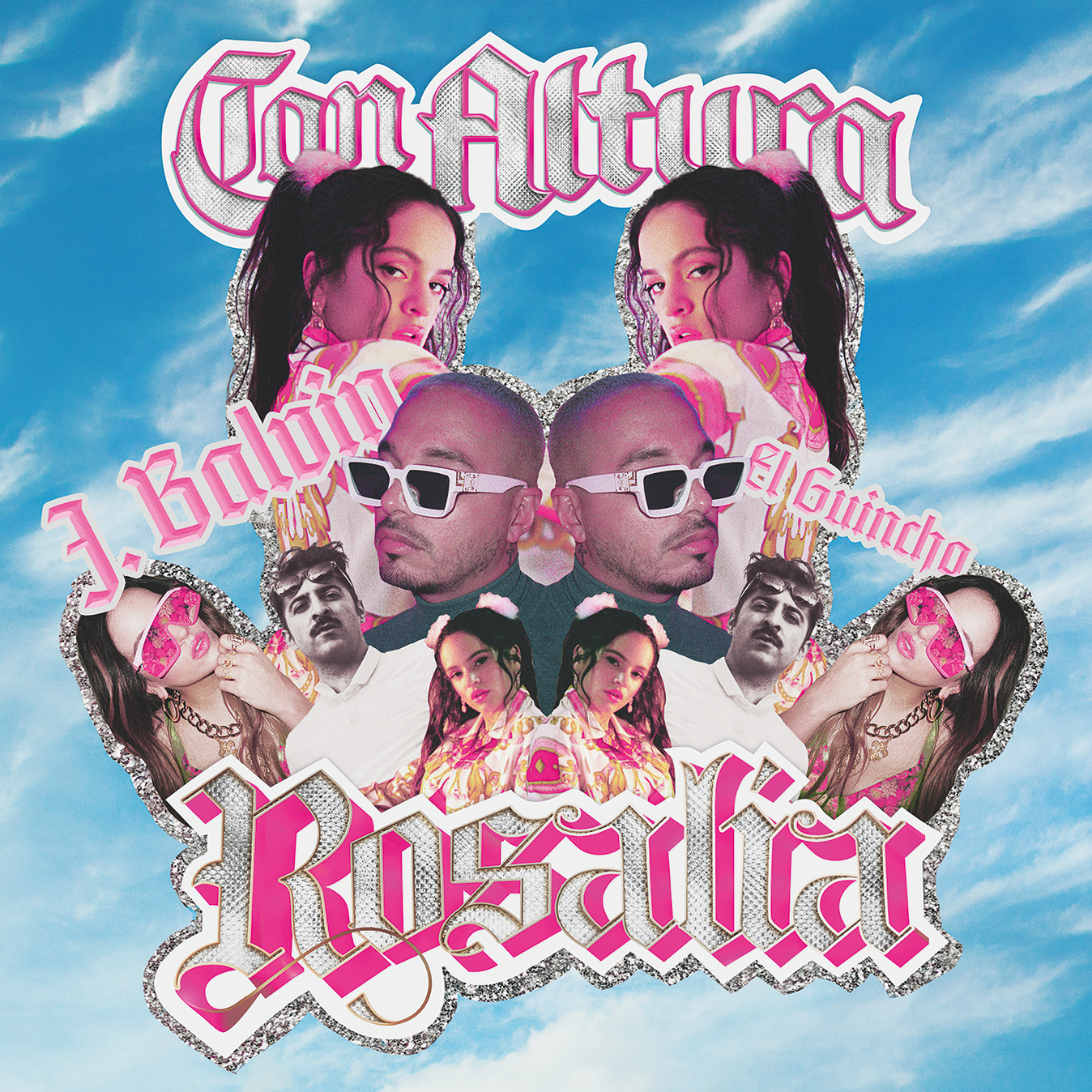
It’s such a euphemism, but I totally get it. When you’re making letter shapes, you’re not really noticing that those slight things– like how you’re curving the letter and the slant you’re giving them – are already baking context right in there. But here is a point where you really start to feel that everyone understands design as a universal language. You become oblivious to things still being culturally segmented within design. I applied to one of those type competitions with the ‘Con Altura’ type – full bling type with all the sparkles.
I didn’t get picked and … as I looked through the submissions I was like, ‘this is a completely different language to what everyone is speaking here.’ There were the beautiful scripts or really cool chunky vector type … definitely no-one was playing in the space I was playing!
I looked through the design conferences to find someone who had that duality of being able to show you bling type in a way that spoke about design and then being able to show you graffiti type as part of their design. And I wasn’t finding it. None of the speakers, none of the judges, no-one at the design conferences had that.
I started looking deeper and trying to find books that talked about the origin of bling type, books that mentioned these Black-originated movements in design. And I wasn’t finding them anywhere. That was a turning point – I’m done with the institution of design!
I do bring bling type into my work. I do use graffiti or airbrush a lot in my work because I want to. I’m not afraid of my work reflecting the time I’m in because that has its own value. When you go into it years later, someone will see it and some 2056 young teen will be like, oh my God, this is so vintage. I love it.
A lot of times people want to make things timeless by making them bland or generic or stripping them of cultural references. But the way to really make something timeless is by making it so deeply reflective of its time that people can’t bear to lose it.
Holly Catford, designer, publisher, Bristol
First published in Eye no. 107 vol. 27, 2025
Single cover for ‘Con Altura’ (2019) by Latin superstar Rosalia.
Eye is the world’s most beautiful and collectable graphic design journal, published for professional designers, students and anyone interested in critical, informed writing about graphic design and visual culture. It is available from all good design bookshops and online at the Eye shop, where you can buy subscriptions and single issues.